

The Shape of Support
Mixed-methods study · 2026
What makes support feel effective in a relationship, and how does that change when one partner is neurodivergent? This study explores how communication unfolds in these couples.
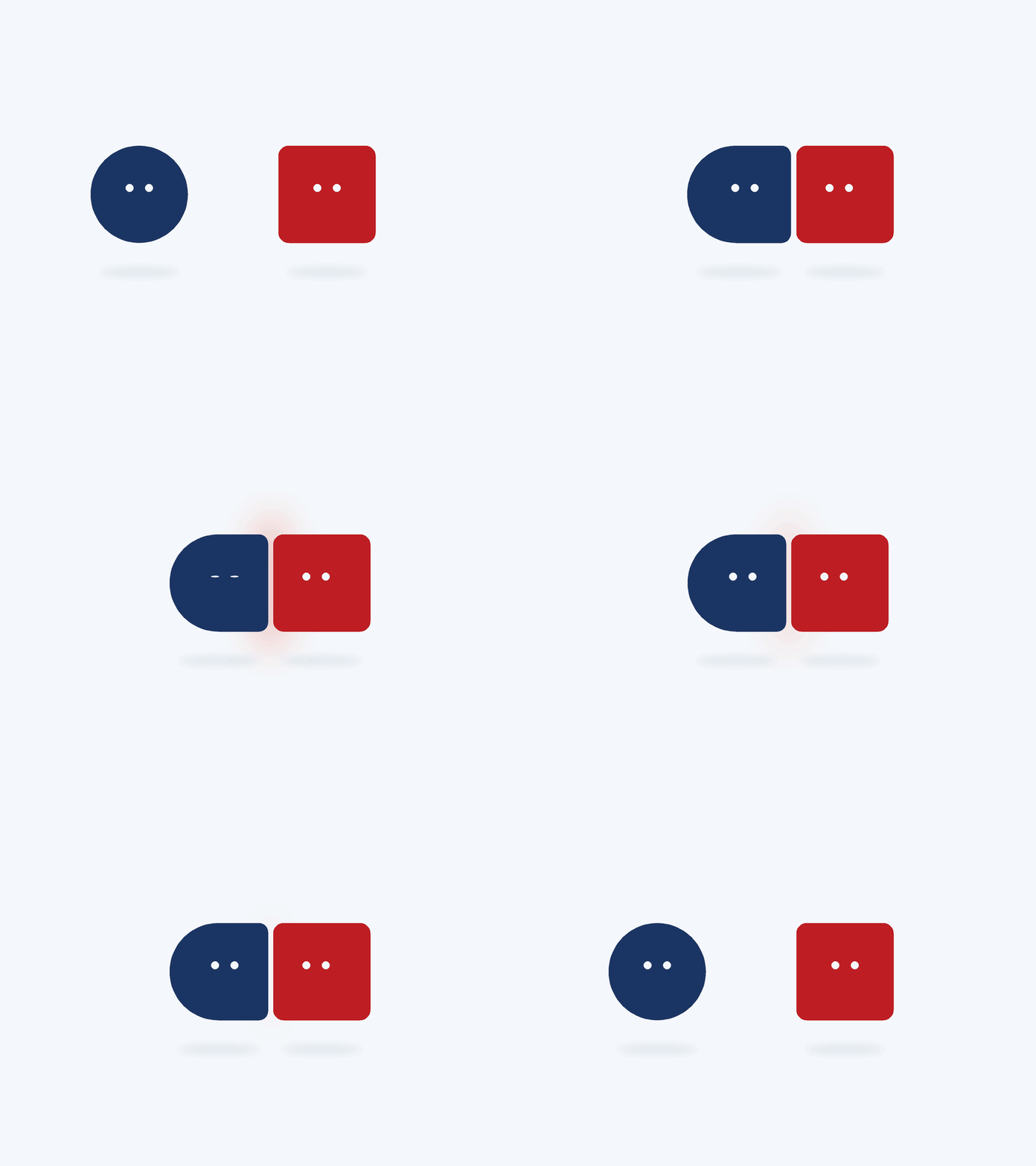
Why it matters
Many neurodivergent people want lasting romantic relationships, yet report lower relationship quality. When one partner is neurodivergent and the other is not, everyday communication and mutual understanding can be harder to get right, and research has rarely asked what helps.
What we did
We asked 185 neurodivergent adults, autistic, with ADHD, or both, to recall one time a romantic partner supported them. They rated what their partner did and how they felt in that moment.
We sought to understand whether their needs for autonomy, competence, and closeness were met, and what helped make that possible.
Findings
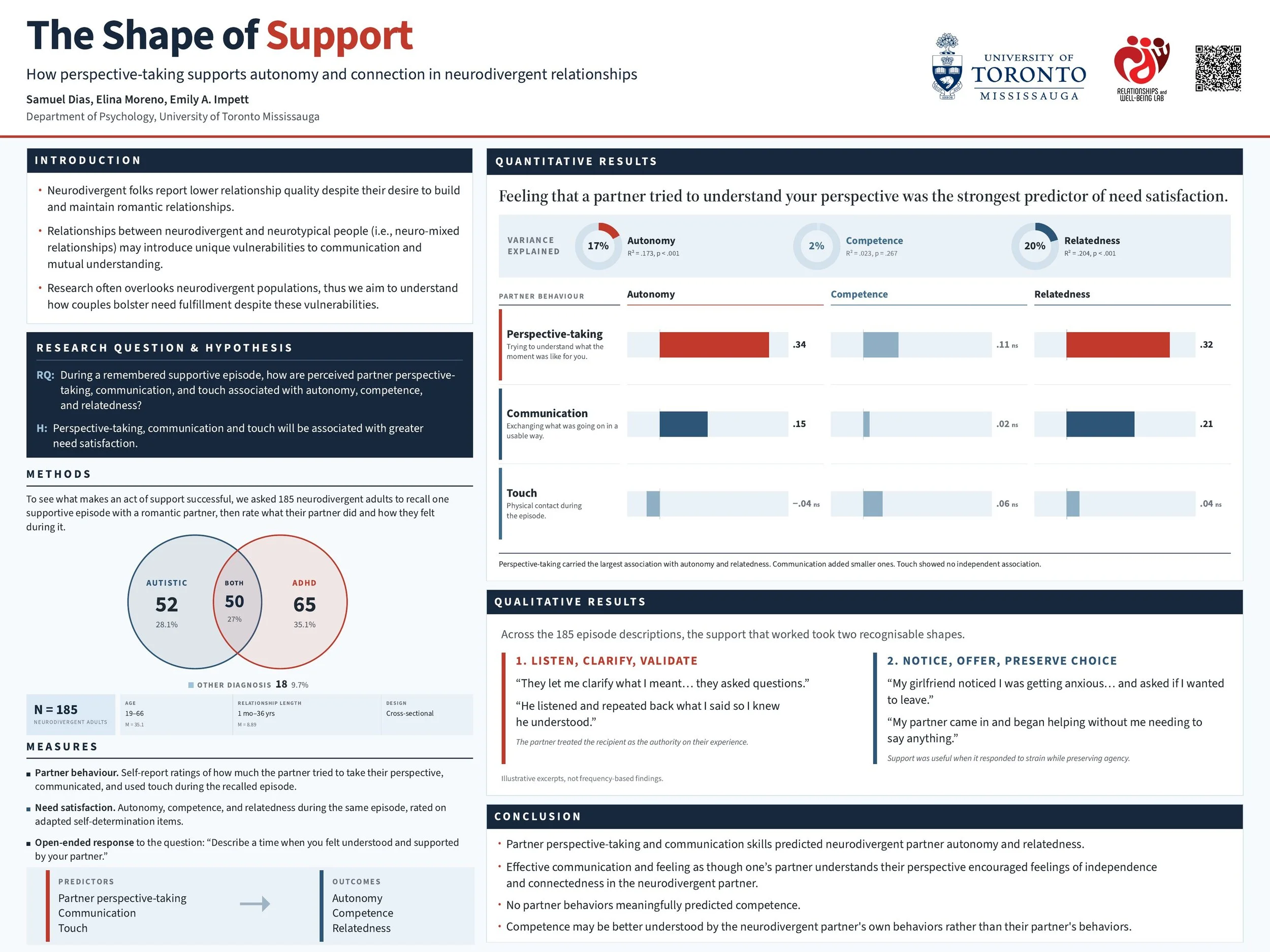
Comparing how partners listened, communicated, and offered touch, we found the strongest predictor was feeling that one’s partner took their perspective and made an effort to understand them.
Perspective-taking and clear communication supported both independence and closeness. No partner behaviour clearly predicted competence, which may depend more on a person’s own actions than on what their partner does.
Two shapes of support
In their own words, people described support that worked in two recognizable ways. Some partners listened, asked questions and checked their understanding, treating the person as the authority on their own experience.
Others noticed signs of strain and offered help while leaving the choice in the person’s hands.
Role
First author, with Elina Moreno and Dr. Emily Impett at the Relationships & Well-Being Lab, University of Toronto Mississauga.